




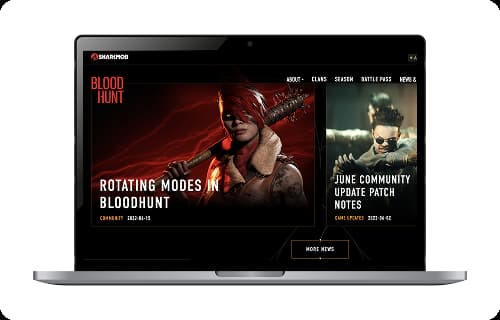
Sharkmob
As a game developer, Sharkmob had little experience with the actual ecommerce…
Lorem ipsum dolor sit amet consectetur. Sagittis ut est sed lectus proin pulvinar auctor ut sit. Commodo ut at id lacus turpis velit amet eget est.
The more data sources your business runs on, the harder it becomes to trust any single report. Forbytes builds data integration solutions that connect your sources, automate transformation, and give your team one reliable place to work from.

| Data Integration Benefit | Business Impact |
|---|---|
| Automated data pipelines | No manual data movement between sources |
| Unified data across systems | One reliable dataset for reporting and decisions |
| Improved data quality | Cleaner inputs, fewer errors downstream |
| Real-time data access | Teams act on current data |
| Scalable integration architecture | Add new data sources without rebuilding existing pipelines |
| Automated data transformation | Raw data becomes usable without manual processing |
As a game developer, Sharkmob had little experience with the actual ecommerce…
Lorem ipsum dolor sit amet consectetur. Sagittis ut est sed lectus proin pulvinar auctor ut sit. Commodo ut at id lacus turpis velit amet eget est.
Context and Challenge Our client, WeSports Group, is a leading Scandinavian group of brands…
Context and Challenge Our client, WeSports Group, is a leading Scandinavian group of brands…
Lorem ipsum dolor sit amet consectetur. Sagittis ut est sed lectus proin pulvinar auctor ut sit. Commodo ut at id lacus turpis velit amet eget est.2
Context and Challenge Our client, WeSports Group, is a leading Scandinavian group of brands…

Context and Challenge Our client, WeSports Group, is a leading Scandinavian group of brands…
Discovery & Requirements MappingMapping data sources, volumes, flows, and integration needs.
|
#2
|
Data MappingDefining field mappings, transformation rules, validation, and error handling.
|
#4
|
Testing & Data Quality ValidationTesting pipelines with real data, edge cases, and failure scenarios.
|
#6
|
|
#1
|
Integration Architecture & DesignDesigning pipeline architecture, data flows, and transformation logic.
|
#3
|
Pipeline DevelopmentBuilding ETL/ELT pipelines, API connectors, and real-time data flows.
|
#5
|
Launch & Continuous MonitoringLaunching with monitoring to track pipeline performance and data quality.
|
Share your current stack and data challenges. We’ll scope the integration architecture and outline priorities before any development begins.

Data integration services cover the full process of connecting data sources, building pipelines, transforming raw data into usable formats, and loading it into your data warehouse or data lake. Our team provides ETL/ELT pipeline development, API-based data integration, real-time data flows, data quality validation, and ongoing pipeline monitoring.
A single-source data pipeline typically takes 3 to 6 weeks. Projects involving multiple data sources, complex data transformation logic, or migration from on-premises to cloud data infrastructure run 2 to 5 months. After the first call followed by the discovery phase, we provide a specific timeline based on your data volume, sources, and integration needs.
Yes. We build data integration solutions across cloud services including Microsoft Azure, AWS, and Google Cloud, as well as on-premises systems. For hybrid environments, we design the integration architecture to handle data movement and transformation across both without forcing a full cloud migration.
We implement data cleansing, deduplication, and validation rules at the point of ingestion. Pipelines include monitoring and alerting so data quality issues are caught before they reach your data warehouse or reporting layer.
We design integration pipelines that process both structured and unstructured data from various sources. During the data mapping phase, we define transformation logic for each data type. Our team makes sure both reach your data warehouse or data lake in a consistent, queryable format.




Forbytes created an app that allowed users to quickly measure themselves to be fitted for custom shirts. As a result, we could increase our speed, quality, and shirt output per week. Forbytes was dedicated to delivering a solution that accurately addressed our needs.

Forbytes’ engineers and team leads worked as part of our RnD group and were directly managed by our company directors. They were both proactive and adaptable, qualities that perfectly match our needs in our fast-growing and constantly evolving environment.

Forbytes has a strong process-oriented way of leading the company, with good respect for themselves and their managers. They made a choice not to become too big but build slowly on more qualified people, which is paying off.

COO & Business
Development at Offerta.se

Our e-commerce site saw online inquiries and orders rise after working with Forbytes. The team used top-notch expertise to inform their suggestions and improvements. Constant communication, quick responses, and prompt delivery made for a smooth and enjoyable collaboration.

The Forbytes team was very professional and demonstrated a great understanding of the business aspects. All tasks were completed above expectations. Their experts were always available, and we never needed to wait for a response or a suggested solution.