



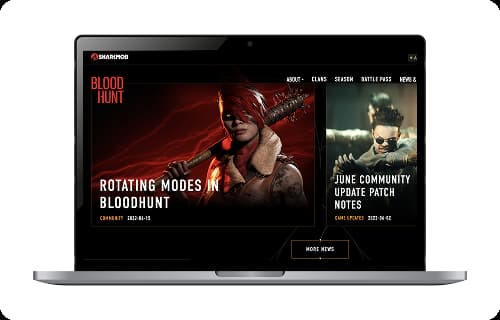
Sharkmob
As a game developer, Sharkmob had little experience with the actual ecommerce…
Lorem ipsum dolor sit amet consectetur. Sagittis ut est sed lectus proin pulvinar auctor ut sit. Commodo ut at id lacus turpis velit amet eget est.
Outdated application stacks and on-prem servers limit what your team can ship. Forbytes migrates your applications to the cloud, modernizes workloads, and keeps production running throughout.

| Migration Benefit | Business Impact |
|---|---|
| Cloud-native applications | Your apps run on scalable cloud infrastructure by default |
| Faster release cycles | Your team ships new features without waiting on on-prem servers |
| Lower cloud costs | You pay for what you use instead of keeping idle data center hardware |
| Reliable app performance | Apps handle traffic spikes without downtime or manual scaling |
| Modern security across apps | Outdated operating systems get replaced with up-to-date cloud security |
| On-demand scalability | New capacity comes online in minutes, not weeks |
As a game developer, Sharkmob had little experience with the actual ecommerce…
Lorem ipsum dolor sit amet consectetur. Sagittis ut est sed lectus proin pulvinar auctor ut sit. Commodo ut at id lacus turpis velit amet eget est.
Context and Challenge Our client, WeSports Group, is a leading Scandinavian group of brands…
Context and Challenge Our client, WeSports Group, is a leading Scandinavian group of brands…
Lorem ipsum dolor sit amet consectetur. Sagittis ut est sed lectus proin pulvinar auctor ut sit. Commodo ut at id lacus turpis velit amet eget est.2
Context and Challenge Our client, WeSports Group, is a leading Scandinavian group of brands…

Context and Challenge Our client, WeSports Group, is a leading Scandinavian group of brands…
Application Portfolio AssessmentAuditing your applications, dependencies, and infrastructure to map migration priorities
|
#2
|
Cloud Architecture DesignDesigning a cloud-ready architecture that fits your apps and workloads.
|
#4
|
Testing & ValidationValidating the performance, security, and reliability of every migrated application.
|
#6
|
|
#1
|
Migration Strategy & RoadmapDefining your cloud migration strategy and migration approach.
|
#3
|
Migration & ModernizationMoving applications to the cloud and modernizing them along the way.
|
#5
|
Optimization & Ongoing SupportMonitoring application performance, optimizing cloud costs, and scaling.
|
We review your application portfolio, identify the common migration risks ahead, and give you a prioritized roadmap tied to your goals and budget. Book a call to talk it through.

Application migration services cover everything involved in moving an application from one environment to another: assessment, migration strategy, cloud architecture design, replatforming an application, testing, and post-migration support.
Application migration focuses on where your application runs. It’s the process of moving an application from on-prem servers or a legacy data center to a cloud platform like AWS, Azure, or Google Cloud. You keep the application mostly as it is.
Application modernization focuses on what the application is — rewriting parts of it, breaking a monolith into microservices, or replacing legacy frameworks with modern runtimes. Most migration projects include some modernization, since you rarely lift-and-shift without touching anything, but they solve different problems.
A focused engagement on a single application or a simple cloud migration typically takes 6 to 10 weeks. Larger projects covering an entire application portfolio, replatforming, or data migration run from 3 to 9 months. Book a call to start with an application portfolio assessment and get a migration roadmap with clear milestones and priorities.
We look at four things per app: business value, technical complexity, cost to operate today, and how much the app would gain from cloud-native features.
Of course! Database migration is part of most application migration projects. We migrate across engines (Oracle to PostgreSQL, SQL Server to Aurora), between environments (on-prem to RDS, Azure SQL, or Cloud SQL), and between cloud providers when needed. We use schema conversion tools, replication for near-zero downtime cutovers, and validation scripts to confirm data integrity before switching traffic.




Forbytes created an app that allowed users to quickly measure themselves to be fitted for custom shirts. As a result, we could increase our speed, quality, and shirt output per week. Forbytes was dedicated to delivering a solution that accurately addressed our needs.
Forbytes’ engineers and team leads worked as part of our RnD group and were directly managed by our company directors. They were both proactive and adaptable, qualities that perfectly match our needs in our fast-growing and constantly evolving environment.
Forbytes has a strong process-oriented way of leading the company, with good respect for themselves and their managers. They made a choice not to become too big but build slowly on more qualified people, which is paying off.

COO & Business
Development at Offerta.se

Our e-commerce site saw online inquiries and orders rise after working with Forbytes. The team used top-notch expertise to inform their suggestions and improvements. Constant communication, quick responses, and prompt delivery made for a smooth and enjoyable collaboration.

The Forbytes team was very professional and demonstrated a great understanding of the business aspects. All tasks were completed above expectations. Their experts were always available, and we never needed to wait for a response or a suggested solution.

On-prem systems and outdated architecture limit what your team can build and ship. Forbytes modernizes your infrastructure to unlock cloud agility, reduce costs, and support your business goals.
| Modernization Benefit | Business Impact |
|---|---|
| Cloud-ready infrastructure | Your workloads run on scalable, modern cloud environments |
| Automated deployment pipelines | Your team ships faster with less manual effort and fewer errors |
| Lower infrastructure costs | You pay for what you use instead of maintaining idle on-prem hardware |
| Improved system reliability | Less downtime and faster recovery when issues occur |
| Modern security across your stack | Legacy vulnerabilities get replaced with up-to-date security policies |
| On-demand scalability | New capacity comes online in minutes, not weeks |
As a game developer, Sharkmob had little experience with the actual ecommerce…
Lorem ipsum dolor sit amet consectetur. Sagittis ut est sed lectus proin pulvinar auctor ut sit. Commodo ut at id lacus turpis velit amet eget est.
Context and Challenge Our client, WeSports Group, is a leading Scandinavian group of brands…
Context and Challenge Our client, WeSports Group, is a leading Scandinavian group of brands…
Lorem ipsum dolor sit amet consectetur. Sagittis ut est sed lectus proin pulvinar auctor ut sit. Commodo ut at id lacus turpis velit amet eget est.2
Context and Challenge Our client, WeSports Group, is a leading Scandinavian group of brands…
Context and Challenge Our client, WeSports Group, is a leading Scandinavian group of brands…
Infrastructure AssessmentAuditing your infrastructure, workloads, and architecture to map modernization priorities.
|
#2
|
Architecture Design & PlanningDesigning a scalable, cloud-ready architecture that fits your workloads and security needs.
|
#4
|
Testing & ValidationValidating performance, security, and reliability of your new infrastructure.
|
#6
|
|
#1
|
Modernization Strategy & RoadmapDefining your cloud strategy, migration approach, and a step-by-step plan.
|
#3
|
Migration & ModernizationMoving workloads to the cloud and automating infrastructure.
|
#5
|
Optimization & Ongoing SupportMonitoring infrastructure health, optimizing cloud costs, and scaling.
|
We assess your current infrastructure, identify the biggest bottlenecks, and define a modernization scope tied to your business goals and budget. Book a call to get started.
Infrastructure modernization covers everything involved in upgrading your existing setup: cloud migration, infrastructure automation, architecture redesign, hybrid cloud setup, workload optimization, and ongoing monitoring — so your systems stay scalable, secure, and cost-effective.
App modernization focuses on the software layer: how your applications are built and deployed. This type of modernization covers breaking a monolith into microservices, moving to cloud-native architecture, or replacing legacy frameworks with modern runtimes. Infrastructure modernization focuses on the underlying platform, meaning compute, storage, and networking. Infrastructure modernization is about migrating from physical servers to the cloud, replacing manual provisioning with automation tools like Terraform, and setting up auto-scaling environments. Both often happen together, but they solve different problems. One updates your code. The other changes where and how that code runs.
Sure thing! We follow an incremental approach that keeps your systems running while we migrate and modernize workloads step by step. We plan changes carefully, validate each stage before moving forward, and always keep rollback options in place.
Yes. We work across hybrid cloud and multi-cloud environments, connecting public and private cloud platforms to your on-prem systems where it makes sense. We help you put each workload on the right infrastructure based on performance, cost, and compliance needs.
Automation cuts out manual work, speeds up deployments, and makes your infrastructure more reliable. As part of our modernization services, we automate provisioning, configuration, and deployment pipelines, so your team ships faster, scales without extra effort, and spends less time maintaining systems.
A focused engagement on a single workload or cloud migration typically takes 8 to 12 weeks. Larger projects covering full architecture redesign, hybrid cloud setup, or data center migration run from 4 to 9 months. Book a call to start with an infrastructure assessment and get a modernization roadmap with clear milestones and priorities.
Forbytes created an app that allowed users to quickly measure themselves to be fitted for custom shirts. As a result, we could increase our speed, quality, and shirt output per week. Forbytes was dedicated to delivering a solution that accurately addressed our needs.
Forbytes’ engineers and team leads worked as part of our RnD group and were directly managed by our company directors. They were both proactive and adaptable, qualities that perfectly match our needs in our fast-growing and constantly evolving environment.
Forbytes has a strong process-oriented way of leading the company, with good respect for themselves and their managers. They made a choice not to become too big but build slowly on more qualified people, which is paying off.
COO & Business
Development at Offerta.se
Our e-commerce site saw online inquiries and orders rise after working with Forbytes. The team used top-notch expertise to inform their suggestions and improvements. Constant communication, quick responses, and prompt delivery made for a smooth and enjoyable collaboration.
The Forbytes team was very professional and demonstrated a great understanding of the business aspects. All tasks were completed above expectations. Their experts were always available, and we never needed to wait for a response or a suggested solution.
If your application behaves differently with every release, the problem is in the foundation. We restructure and modernize your codebase, so the regular updates stop breaking other parts of the system.
To make the right changes and avoid breaking down the system, you need a clear strategy. Forbytes analyzes your architecture, technical debt, and bottlenecks to create an effective modernization roadmap. Instead of chaotic work, you get a prioritized, evidence-based software modernization plan that weighs all the risks and benefits.
If your codebase becomes fragile, tangled, or outdated, every change turns into a risk. We refactor and standardize code, upgrade frameworks, modernize dependencies, and establish clearer ownership boundaries. The result is a maintainable platform where teams can deliver features faster and with confidence.
Manual deployments and rigid infrastructure create an invisible ceiling that stalls business growth and drains engineering resources. Our team can migrate your apps to the cloud and automate delivery pipelines, eliminating bottlenecks. Your team moves from fighting server fires to launching high-impact features in minutes.
Modernize legacy systems without disruption. We help you remove technical debt and stabilize your platform without full rewrites.
When small fixes stop moving the needle, a phased rebuild is usually the most pragmatic path to take. We design a controlled migration that runs alongside your current system to keep the business alive. This removes the structural limits holding you back, giving you a high-performance platform that justifies the investment.
| App Modernization Benefit | Business Impact |
|---|---|
| Reduced technical debt | Shorter release cycles and fewer bugs |
| Improved system performance | Faster, smoother user experiences |
| Enhanced security | Lower operational and compliance risks |
| Effective integrations | Reduced manual work and faster automation |
| Scalability and agility | Grow without disruptions or major rewrites |
| Developer confidence | Teams can implement changes quickly and safely |
As a game developer, Sharkmob had little experience with the actual ecommerce…
Lorem ipsum dolor sit amet consectetur. Sagittis ut est sed lectus proin pulvinar auctor ut sit. Commodo ut at id lacus turpis velit amet eget est.
Context and Challenge Our client, WeSports Group, is a leading Scandinavian group of brands…
Context and Challenge Our client, WeSports Group, is a leading Scandinavian group of brands…
Lorem ipsum dolor sit amet consectetur. Sagittis ut est sed lectus proin pulvinar auctor ut sit. Commodo ut at id lacus turpis velit amet eget est.2
Context and Challenge Our client, WeSports Group, is a leading Scandinavian group of brands…
Context and Challenge Our client, WeSports Group, is a leading Scandinavian group of brands…
App assessmentAudit architecture, code, dependencies, and technical debt to pinpoint risks.
|
#2
|
Architecture redesignImprove scalability, flexibility, and maintainability with modern patterns.
|
#4
|
Testing and quality assuranceValidate performance, security, and reliability before release.
|
#6
|
|
#1
|
Modernization strategyCreate a clear roadmap balancing quick wins and long-term stability.
|
#3
|
Incremental modernizationUpgrade components step by step to reduce risk and downtime.
|
#5
|
Deployment and optimizationLaunch the updated app and continuously refine for peak performance.
|
Get a full architecture audit from our experts to pinpoint issues and prioritize improvements.
We get it: updating a live app can feel risky. That’s why we never attempt a full overhaul all at once. Instead, we modernize incrementally, updating one component at a time while keeping the rest of the system fully operational. You won’t see downtime, and your users won’t notice a thing, but your app will steadily become more stable and future-proof.
Absolutely. Modernization doesn’t mean throwing everything away. We carefully target fragile or outdated areas, while leaving your core features intact. This way, your team can continue running the app, serving users, and even rolling out minor updates without interruption, all while we improve the underlying structure.
It’s the opposite: messy, outdated code is what slows teams down and makes every change stressful. By refactoring and standardizing the code during modernization, we remove these hidden bottlenecks. Your developers will be able to build new features faster, with fewer bugs, and without tiptoeing around fragile parts of the app.
Outdated frameworks and libraries are one of the biggest hidden risks in any app. We carefully upgrade them to modern, supported versions, making sure everything works together smoothly. That means your app stays stable during the transition, your team doesn’t have to fight compatibility issues, and you’re ready to adopt new technologies without surprises.
Yes. Old, tangled code often blocks AI tools, APIs, or modern integrations from working properly. We clean up the code, organize dependencies, and structure the app so it can communicate easily with modern systems. After modernization, adding AI features, analytics, or new integrations becomes much simpler and safer.
Scalability is built in from the start. We redesign architecture where needed, break monolithic components into modular services, and remove hidden bottlenecks. This ensures that as your user base grows or new features are added, the app can scale smoothly without downtime, slowdowns, or last-minute firefighting by your team.
Forbytes created an app that allowed users to quickly measure themselves to be fitted for custom shirts. As a result, we could increase our speed, quality, and shirt output per week. Forbytes was dedicated to delivering a solution that accurately addressed our needs.
Forbytes’ engineers and team leads worked as part of our RnD group and were directly managed by our company directors. They were both proactive and adaptable, qualities that perfectly match our needs in our fast-growing and constantly evolving environment.
Forbytes has a strong process-oriented way of leading the company, with good respect for themselves and their managers. They made a choice not to become too big but build slowly on more qualified people, which is paying off.
COO & Business
Development at Offerta.se
Our e-commerce site saw online inquiries and orders rise after working with Forbytes. The team used top-notch expertise to inform their suggestions and improvements. Constant communication, quick responses, and prompt delivery made for a smooth and enjoyable collaboration.
The Forbytes team was very professional and demonstrated a great understanding of the business aspects. All tasks were completed above expectations. Their experts were always available, and we never needed to wait for a response or a suggested solution.
If your product is hard to change, expensive to maintain, or risky to scale, modernization helps you eliminate technical bottlenecks without rebuilding everything from scratch.
To make the right changes and avoid breaking down the system, you need a clear strategy. Forbytes analyzes your architecture, technical debt, and bottlenecks to create an effective modernization roadmap. Instead of chaotic work, you get a prioritized, evidence-based software modernization plan that weighs all the risks and benefits.
If your codebase becomes fragile, tangled, or outdated, every change turns into a risk. We refactor and standardize code, upgrade frameworks, modernize dependencies, and establish clearer ownership boundaries. The result is a maintainable platform where teams can deliver features faster and with confidence.
Manual deployments and rigid infrastructure create an invisible ceiling that stalls business growth and drains engineering resources. Our team can migrate your apps to the cloud and automate delivery pipelines, eliminating bottlenecks. Your team moves from fighting server fires to launching high-impact features in minutes.
Modernize legacy systems without disruption. We help you remove technical debt and stabilize your platform without full rewrites.
When small fixes stop moving the needle, a phased rebuild is usually the most pragmatic path to take. We design a controlled migration that runs alongside your current system to keep the business alive. This removes the structural limits holding you back, giving you a high-performance platform that justifies the investment.
| Legacy Modernization Benefit | Impact |
|---|---|
| Technical debt reduction | Shorter release cycles |
| Improved system performance | Higher conversion rates |
| Enhanced security | Lower business and legal risks |
| Effective integrations | Reduced manual effort |
| Scalability and agility | Ability to grow without disruptions |
| Competitiveness | Faster time to market |
As a game developer, Sharkmob had little experience with the actual ecommerce…
Lorem ipsum dolor sit amet consectetur. Sagittis ut est sed lectus proin pulvinar auctor ut sit. Commodo ut at id lacus turpis velit amet eget est.
Context and Challenge Our client, WeSports Group, is a leading Scandinavian group of brands…
Context and Challenge Our client, WeSports Group, is a leading Scandinavian group of brands…
Lorem ipsum dolor sit amet consectetur. Sagittis ut est sed lectus proin pulvinar auctor ut sit. Commodo ut at id lacus turpis velit amet eget est.2
Context and Challenge Our client, WeSports Group, is a leading Scandinavian group of brands…
Context and Challenge Our client, WeSports Group, is a leading Scandinavian group of brands…
System assessmentAudit of architecture, code quality, dependencies, and technical debt.Audit of architecture, code quality, dependencies, and technical debt.Audit of architecture, code quality, dependencies, and technical debt.
|
#2
|
Architecture redesignImproving scalability and flexibility with modern architecture patterns.
|
#4
|
Testing and quality assuranceValidating performance, security, and system reliability.
|
#6
|
|
#1
|
Modernization strategyDefining the best approach and building a clear modernization roadmap.
|
#3
|
Incremental modernizationUpgrading components step by step to reduce risks and downtime.
|
#5
|
Deployment and optimizationLaunching the updated system and continuously improving performance.
|
Our application modernization services begin by getting under the hood. Forbytes’ engineers dig into your architecture, code quality, and infrastructure to find where technical debt is draining your budget. You receive a strategic roadmap that balances quick wins with long-term stability, so your team knows the ROI before the first sprint.
Forbytes created an app that allowed users to quickly measure themselves to be fitted for custom shirts. As a result, we could increase our speed, quality, and shirt output per week. Forbytes was dedicated to delivering a solution that accurately addressed our needs.
Forbytes’ engineers and team leads worked as part of our RnD group and were directly managed by our company directors. They were both proactive and adaptable, qualities that perfectly match our needs in our fast-growing and constantly evolving environment.
Forbytes has a strong process-oriented way of leading the company, with good respect for themselves and their managers. They made a choice not to become too big but build slowly on more qualified people, which is paying off.
COO & Business
Development at Offerta.se
Our e-commerce site saw online inquiries and orders rise after working with Forbytes. The team used top-notch expertise to inform their suggestions and improvements. Constant communication, quick responses, and prompt delivery made for a smooth and enjoyable collaboration.
The Forbytes team was very professional and demonstrated a great understanding of the business aspects. All tasks were completed above expectations. Their experts were always available, and we never needed to wait for a response or a suggested solution.
When your software can’t keep up with your business, patching won’t help. Forbytes re-engineers legacy code to restore performance, reliability, and scalability.
To make the right changes and avoid breaking down the system, you need a clear strategy. Forbytes analyzes your architecture, technical debt, and bottlenecks to create an effective modernization roadmap. Instead of chaotic work, you get a prioritized, evidence-based software modernization plan that weighs all the risks and benefits.
If your codebase becomes fragile, tangled, or outdated, every change turns into a risk. We refactor and standardize code, upgrade frameworks, modernize dependencies, and establish clearer ownership boundaries. The result is a maintainable platform where teams can deliver features faster and with confidence.
Manual deployments and rigid infrastructure create an invisible ceiling that stalls business growth and drains engineering resources. Our team can migrate your apps to the cloud and automate delivery pipelines, eliminating bottlenecks. Your team moves from fighting server fires to launching high-impact features in minutes.
Modernize legacy systems without disruption. We help you remove technical debt and stabilize your platform without full rewrites.
When small fixes stop moving the needle, a phased rebuild is usually the most pragmatic path to take. We design a controlled migration that runs alongside your current system to keep the business alive. This removes the structural limits holding you back, giving you a high-performance platform that justifies the investment.
| Reduced technical debt | Your team ships new features instead |
|---|---|
| Modernized software architecture | Your system supports growth without costly rebuilds |
| Modernized software architecture | Your system supports growth without costly rebuilds |
| Improved system performance | Faster response times and fewer crashes for your users |
| Lower maintenance costs | Fewer resources spent on keeping outdated systems alive |
| Scalable and flexible codebase | Add new functionality without breaking existing workflows |
| Streamlined development cycles | Developers move faster with clean, well-structured code |
As a game developer, Sharkmob had little experience with the actual ecommerce…
Lorem ipsum dolor sit amet consectetur. Sagittis ut est sed lectus proin pulvinar auctor ut sit. Commodo ut at id lacus turpis velit amet eget est.
Context and Challenge Our client, WeSports Group, is a leading Scandinavian group of brands…
Context and Challenge Our client, WeSports Group, is a leading Scandinavian group of brands…
Lorem ipsum dolor sit amet consectetur. Sagittis ut est sed lectus proin pulvinar auctor ut sit. Commodo ut at id lacus turpis velit amet eget est.2
Context and Challenge Our client, WeSports Group, is a leading Scandinavian group of brands…
Context and Challenge Our client, WeSports Group, is a leading Scandinavian group of brands…
Legacy Software AuditAnalyzing your codebase and tech stack to map reengineering priorities.
|
#2
|
Architecture Redesign & PlanningRestructuring your architecture to support modern frameworks.
|
#4
|
Testing & Quality AssuranceValidating every change against real workflows to confirm reliability standards.
|
#6
|
|
#1
|
Re-Engineering Strategy & RoadmapSetting business goals, modernization milestones, and a re-engineering plan.
|
#3
|
Code Refactoring & ModernizationRefactoring legacy code, migrating outdated components, and rebuilding key modules.
|
#5
|
Deployment & Ongoing OptimizationDeploying reengineered software with monitoring and optimizing.
|
We analyze your codebase, identify the root causes of poor performance, and outline a step-by-step reengineering plan. Book a call and walk away with a clear starting point.
Software reengineering services cover the full process of analyzing and restructuring your existing software to improve performance, scalability, and maintainability. This includes legacy software audits, code refactoring, architecture redesign, codebase migration, API integration, and post-launch optimization to align your system with current business needs.
Software reengineering focuses on improving and modernizing your existing system without replacing it entirely. We restructure the codebase, update the tech stack, and redesign the architecture while preserving your core business logic. A full rebuild starts from scratch, which carries higher cost, longer timelines, and greater risk of disruption.
Sure. Our re-engineering process follows an incremental approach that lets your system keep running while we modernize it step by step. We prioritize changes that deliver the most value first and minimize downtime throughout the entire process.
We start with a thorough audit of your existing codebase to understand its structure, dependencies, and business logic, even without documentation. Our engineers use reverse engineering techniques to map the system before defining the reengineering roadmap.
Software reengineering targets outdated frameworks, tightly coupled architecture, poor code quality, missing test coverage, and slow release cycles. We restructure your codebase to reduce maintenance costs, improve reliability, and make future development faster and more predictable.
A focused reengineering engagement covering a single module or service typically takes 8 to 12 weeks. Larger projects involving full architecture redesign, cloud migration, or legacy system modernization run from 4 to 9 months. Book a call to start with a legacy software audit and get a detailed timeline with clear milestones.
Forbytes created an app that allowed users to quickly measure themselves to be fitted for custom shirts. As a result, we could increase our speed, quality, and shirt output per week. Forbytes was dedicated to delivering a solution that accurately addressed our needs.
Forbytes’ engineers and team leads worked as part of our RnD group and were directly managed by our company directors. They were both proactive and adaptable, qualities that perfectly match our needs in our fast-growing and constantly evolving environment.
Forbytes has a strong process-oriented way of leading the company, with good respect for themselves and their managers. They made a choice not to become too big but build slowly on more qualified people, which is paying off.
COO & Business
Development at Offerta.se
Our e-commerce site saw online inquiries and orders rise after working with Forbytes. The team used top-notch expertise to inform their suggestions and improvements. Constant communication, quick responses, and prompt delivery made for a smooth and enjoyable collaboration.
The Forbytes team was very professional and demonstrated a great understanding of the business aspects. All tasks were completed above expectations. Their experts were always available, and we never needed to wait for a response or a suggested solution.
If your product is hard to change, expensive to maintain, or risky to scale, modernization helps you eliminate technical bottlenecks without rebuilding everything from scratch.
To make the right changes and avoid breaking down the system, you need a clear strategy. Forbytes analyzes your architecture, technical debt, and bottlenecks to create an effective modernization roadmap. Instead of chaotic work, you get a prioritized, evidence-based software modernization plan that weighs all the risks and benefits.
If your codebase becomes fragile, tangled, or outdated, every change turns into a risk. We refactor and standardize code, upgrade frameworks, modernize dependencies, and establish clearer ownership boundaries. The result is a maintainable platform where teams can deliver features faster and with confidence.
Manual deployments and rigid infrastructure create an invisible ceiling that stalls business growth and drains engineering resources. Our team can migrate your apps to the cloud and automate delivery pipelines, eliminating bottlenecks. Your team moves from fighting server fires to launching high-impact features in minutes.
Modernize legacy systems without disruption. We help you remove technical debt and stabilize your platform without full rewrites.
When small fixes stop moving the needle, a phased rebuild is usually the most pragmatic path to take. We design a controlled migration that runs alongside your current system to keep the business alive. This removes the structural limits holding you back, giving you a high-performance platform that justifies the investment.
| Legacy Modernization Benefit | Impact |
|---|---|
| Technical debt reduction | Shorter release cycles |
| Improved system performance | Higher conversion rates |
| Enhanced security | Lower business and legal risks |
| Effective integrations | Reduced manual effort |
| Scalability and agility | Ability to grow without disruptions |
| Competitiveness | Faster time to market |
As a game developer, Sharkmob had little experience with the actual ecommerce…
Lorem ipsum dolor sit amet consectetur. Sagittis ut est sed lectus proin pulvinar auctor ut sit. Commodo ut at id lacus turpis velit amet eget est.
Context and Challenge Our client, WeSports Group, is a leading Scandinavian group of brands…
Context and Challenge Our client, WeSports Group, is a leading Scandinavian group of brands…
Lorem ipsum dolor sit amet consectetur. Sagittis ut est sed lectus proin pulvinar auctor ut sit. Commodo ut at id lacus turpis velit amet eget est.2
Context and Challenge Our client, WeSports Group, is a leading Scandinavian group of brands…
Context and Challenge Our client, WeSports Group, is a leading Scandinavian group of brands…
System assessmentAudit of architecture, code quality, dependencies, and technical debt.
|
#2
|
Architecture redesignImproving scalability and flexibility with modern architecture patterns.
|
#4
|
Testing and quality assuranceValidating performance, security, and system reliability.
|
#6
|
|
#1
|
Modernization strategyDefining the best approach and building a clear modernization roadmap.
|
#3
|
Incremental modernizationUpgrading components step by step to reduce risks and downtime.
|
#5
|
Deployment and optimizationLaunching the updated system and continuously improving performance.
|
Our application modernization services begin by getting under the hood. Forbytes’ engineers dig into your architecture, code quality, and infrastructure to find where technical debt is draining your budget. You receive a strategic roadmap that balances quick wins with long-term stability, so your team knows the ROI before the first sprint.
Forbytes created an app that allowed users to quickly measure themselves to be fitted for custom shirts. As a result, we could increase our speed, quality, and shirt output per week. Forbytes was dedicated to delivering a solution that accurately addressed our needs.
Forbytes’ engineers and team leads worked as part of our RnD group and were directly managed by our company directors. They were both proactive and adaptable, qualities that perfectly match our needs in our fast-growing and constantly evolving environment.
Forbytes has a strong process-oriented way of leading the company, with good respect for themselves and their managers. They made a choice not to become too big but build slowly on more qualified people, which is paying off.
COO & Business
Development at Offerta.se
Our e-commerce site saw online inquiries and orders rise after working with Forbytes. The team used top-notch expertise to inform their suggestions and improvements. Constant communication, quick responses, and prompt delivery made for a smooth and enjoyable collaboration.
The Forbytes team was very professional and demonstrated a great understanding of the business aspects. All tasks were completed above expectations. Their experts were always available, and we never needed to wait for a response or a suggested solution.
If your product is hard to change, expensive to maintain, or risky to scale, modernization helps you eliminate technical bottlenecks without rebuilding everything from scratch.
To make the right changes and avoid breaking down the system, you need a clear strategy. Forbytes analyzes your architecture, technical debt, and bottlenecks to create an effective modernization roadmap. Instead of chaotic work, you get a prioritized, evidence-based software modernization plan that weighs all the risks and benefits.
If your codebase becomes fragile, tangled, or outdated, every change turns into a risk. We refactor and standardize code, upgrade frameworks, modernize dependencies, and establish clearer ownership boundaries. The result is a maintainable platform where teams can deliver features faster and with confidence.
Manual deployments and rigid infrastructure create an invisible ceiling that stalls business growth and drains engineering resources. Our team can migrate your apps to the cloud and automate delivery pipelines, eliminating bottlenecks. Your team moves from fighting server fires to launching high-impact features in minutes.
When small fixes stop moving the needle, a phased rebuild is usually the most pragmatic path to take. We design a controlled migration that runs alongside your current system to keep the business alive. This removes the structural limits holding you back, giving you a high-performance platform that justifies the investment.
| Legacy Modernization Benefit | Impact |
|---|---|
| Technical debt reduction | Shorter release cycles |
| Improved system performance | Higher conversion rates |
| Enhanced security | Lower business and legal risks |
| Effective integrations | Reduced manual effort |
| Scalability and agility | Ability to grow without disruptions |
| Competitiveness | Faster time to market |
As a game developer, Sharkmob had little experience with the actual ecommerce…
Lorem ipsum dolor sit amet consectetur. Sagittis ut est sed lectus proin pulvinar auctor ut sit. Commodo ut at id lacus turpis velit amet eget est.
Context and Challenge Our client, WeSports Group, is a leading Scandinavian group of brands…
Context and Challenge Our client, WeSports Group, is a leading Scandinavian group of brands…
Lorem ipsum dolor sit amet consectetur. Sagittis ut est sed lectus proin pulvinar auctor ut sit. Commodo ut at id lacus turpis velit amet eget est.2
Context and Challenge Our client, WeSports Group, is a leading Scandinavian group of brands…
Context and Challenge Our client, WeSports Group, is a leading Scandinavian group of brands…
System assessmentAudit of architecture, code quality, dependencies, and technical debt.
|
#2
|
Architecture redesignImproving scalability and flexibility with modern architecture patterns.
|
#4
|
Testing and quality assuranceValidating performance, security, and system reliability.
|
#6
|
|
#1
|
Modernization strategyDefining the best approach and building a clear modernization roadmap.
|
#3
|
Incremental modernizationUpgrading components step by step to reduce risks and downtime.
|
#5
|
Deployment and optimizationLaunching the updated system and continuously improving performance.
|
Understand your system’s current condition and find out what’s draining your budget.
Our application modernization services begin by getting under the hood. Forbytes’ engineers dig into your architecture, code quality, and infrastructure to find where technical debt is draining your budget. You receive a strategic roadmap that balances quick wins with long-term stability, so your team knows the ROI before the first sprint.
In short, no. By using incremental updates (often called the “strangler pattern”), we replace aging components piece by piece. Your system stays live, your revenue stays protected, and your users won’t notice anything but a faster experience.
It comes down to a cold look at the numbers and your future goals. If your current code is a bottleneck for growth, we’ll tell you. Our software modernization company will weigh the cost of maintenance against the cost of a rebuild to find the most pragmatic path. It’s about choosing the strategy that gets you to market fastest without piling on more debt.
Forbytes embeds with your developers and product owners as a single unit. Through shared Slack channels, transparent documentation, and regular syncs, we make sure our legacy software modernization services are perfectly aligned with your goals. You keep full visibility while we handle heavy lifting.
The timeline depends on how deep the legacy roots go. That said, we don’t believe in big–bang releases that take a year to see value. We aim for high-impact improvements within weeks, followed by phased architectural shifts. After our initial audit, you’ll have a clear timeline with hard milestones.
Absolutely. Modernization services don’t have to be an all-or-nothing gamble. If your core logic is solid but your infrastructure is failing, we focus there. We can surgically upgrade APIs, move specific services to the cloud, or fix integration gaps while leaving your stable assets untouched.
We deliver our IT modernization service with an exit strategy in mind. By moving to modular architectures and automated deployment pipelines, we make the system change-friendly. This ensures that several years from now, your platform is still agile enough to adopt advanced technologies like AI, without another massive overhaul.
Forbytes created an app that allowed users to quickly measure themselves to be fitted for custom shirts. As a result, we could increase our speed, quality, and shirt output per week. Forbytes was dedicated to delivering a solution that accurately addressed our needs.
Forbytes’ engineers and team leads worked as part of our RnD group and were directly managed by our company directors. They were both proactive and adaptable, qualities that perfectly match our needs in our fast-growing and constantly evolving environment.
Forbytes has a strong process-oriented way of leading the company, with good respect for themselves and their managers. They made a choice not to become too big but build slowly on more qualified people, which is paying off.
COO & Business
Development at Offerta.se
Our e-commerce site saw online inquiries and orders rise after working with Forbytes. The team used top-notch expertise to inform their suggestions and improvements. Constant communication, quick responses, and prompt delivery made for a smooth and enjoyable collaboration.
The Forbytes team was very professional and demonstrated a great understanding of the business aspects. All tasks were completed above expectations. Their experts were always available, and we never needed to wait for a response or a suggested solution.