



Sharkmob
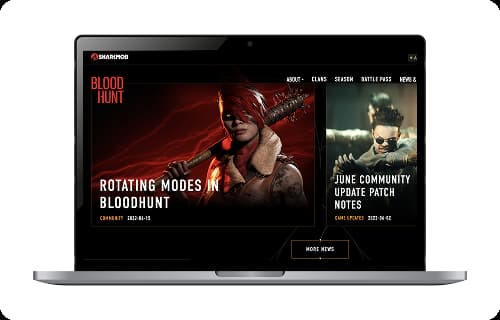
As a game developer, Sharkmob had little experience with the actual ecommerce…
Lorem ipsum dolor sit amet consectetur. Sagittis ut est sed lectus proin pulvinar auctor ut sit. Commodo ut at id lacus turpis velit amet eget est.
Every time your ecommerce platform delays a feature, a competitor ships it. Hire an ecommerce operations engineering team to clear the work waiting for you in the backlog: capability builds, ecommerce integrations, migrations, and performance fixes.

| Ecommerce Operations Engineering Outcome | Business Impact |
|---|---|
| New platform capabilities ship faster | Merchandising, promotions, and pricing changes reach customers in days |
| Ecommerce-specific integrations | PIM, OMS, ERP, payments, and marketplaces sync without custom workarounds |
| Lower-risk platform migration | Stores move to a new platform in phases, with revenue protected throughout |
| Faster storefront and checkout | Conversion climbs as page load and checkout response times drop |
| Cleaner platform architecture | New marketplaces and channels plug in without breaking existing flows |
| A platform ready for growth | The system carries more traffic, SKUs, and regions as the business scales |
As a game developer, Sharkmob had little experience with the actual ecommerce…
Lorem ipsum dolor sit amet consectetur. Sagittis ut est sed lectus proin pulvinar auctor ut sit. Commodo ut at id lacus turpis velit amet eget est.
Context and Challenge Our client, WeSports Group, is a leading Scandinavian group of brands…
Context and Challenge Our client, WeSports Group, is a leading Scandinavian group of brands…
Lorem ipsum dolor sit amet consectetur. Sagittis ut est sed lectus proin pulvinar auctor ut sit. Commodo ut at id lacus turpis velit amet eget est.2
Context and Challenge Our client, WeSports Group, is a leading Scandinavian group of brands…

Context and Challenge Our client, WeSports Group, is a leading Scandinavian group of brands…
Platform AssessmentWe map the platform, integrations, and growth blockers.
|
#2
|
Target Architecture DesignWe design the platform around how your store will grow.
|
#4
|
Validation & CutoverWe test against a real catalog and traffic before going live.
|
#6
|
|
#1
|
Engineering RoadmapWe sequence capability builds, integrations, and migrations.
|
#3
|
Phased Build & RolloutEngineers ship capabilities and integrations in stages.
|
#5
|
Long-Term SupportWe evolve the platform as you add channels, regions, and SKUs.
|
Tell us where your ecommerce platform holds the business back. We’ll map a 90-day plan that tackles the most expensive limit first — without putting the storefront at risk.

An ecommerce operations engineering team builds and evolves the platform behind your storefront. The team adds new capabilities the merchandising and marketing teams need, integrates the platform with the PIM, OMS, ERP, payments, and marketplaces that the business runs on, and handles migrations between ecommerce platforms when growth demands a new foundation. Engineers ship features that move conversion and revenue instead of patching the same gaps every release.
We migrate in phases. The assessment shows which parts of the storefront carry the most revenue and the most risk, and the team moves them on a sequence the business can plan around. Catalog, customer, and order data sync between old and new platforms during the transition, so no order falls through the gap. Each phase ships behind a rollback path, gets validated against real traffic, and only cuts over once the new platform holds.
We build integrations across the full ecommerce stack: PIM, OMS, ERP, WMS, payment gateways, tax engines, shipping carriers, marketplaces, and headless frontends. The team works with the documented APIs of platforms like Magento, Shopify Plus, BigCommerce, and commercetools, and wraps older systems behind clean interfaces when they don’t expose modern endpoints. New partners plug in without custom rework each time.
Hire an ecommerce operations engineering team when platform changes start taking quarters instead of sprints, when a migration keeps slipping because the risk feels too high, or when each new integration starts from scratch. It’s also the right call before a peak season, a marketplace launch, or a regional expansion — the cost of building the platform up before growth is much lower than the cost of recovering from breakage during it.
The platform stays live throughout. The team expands what the system can do, integrates it with the partners the business already runs, and handles migration only when the data justifies it. Some changes ship as platform extensions; others need a new integration layer or a phased move to a different platform. The decision traces back to business impact, not technology preference.




Forbytes created an app that allowed users to quickly measure themselves to be fitted for custom shirts. As a result, we could increase our speed, quality, and shirt output per week. Forbytes was dedicated to delivering a solution that accurately addressed our needs.

Forbytes’ engineers and team leads worked as part of our RnD group and were directly managed by our company directors. They were both proactive and adaptable, qualities that perfectly match our needs in our fast-growing and constantly evolving environment.

Forbytes has a strong process-oriented way of leading the company, with good respect for themselves and their managers. They made a choice not to become too big but build slowly on more qualified people, which is paying off.

COO & Business
Development at Offerta.se

Our e-commerce site saw online inquiries and orders rise after working with Forbytes. The team used top-notch expertise to inform their suggestions and improvements. Constant communication, quick responses, and prompt delivery made for a smooth and enjoyable collaboration.

The Forbytes team was very professional and demonstrated a great understanding of the business aspects. All tasks were completed above expectations. Their experts were always available, and we never needed to wait for a response or a suggested solution.

Checkout slows down on the night your campaign launches. Reports queue up, the database CPU pins at 100%, and your engineers can’t trace the bottleneck before the next traffic spike. Hire a performance engineering team from Forbytes to profile the stack, fix the slowest paths, and prepare your platform for peak traffic.
| Performance Outcome | Business Impact |
|---|---|
| Faster page loads | Conversion climbs and bounce rates drop on revenue pages |
| Stable response times under load | Checkout, search, and APIs hold up through peak traffic |
| Lower infrastructure costs | The same hardware carries more requests after tuning |
| Predictable scaling headroom | The platform absorbs next year's volume without emergency work |
| Cleaner observability | Engineers see where latency comes from instead of guessing |
| Fewer production incidents | Bottlenecks surface in load tests before they hit real users |
As a game developer, Sharkmob had little experience with the actual ecommerce…
Lorem ipsum dolor sit amet consectetur. Sagittis ut est sed lectus proin pulvinar auctor ut sit. Commodo ut at id lacus turpis velit amet eget est.
Context and Challenge Our client, WeSports Group, is a leading Scandinavian group of brands…
Context and Challenge Our client, WeSports Group, is a leading Scandinavian group of brands…
Lorem ipsum dolor sit amet consectetur. Sagittis ut est sed lectus proin pulvinar auctor ut sit. Commodo ut at id lacus turpis velit amet eget est.2
Context and Challenge Our client, WeSports Group, is a leading Scandinavian group of brands…
Context and Challenge Our client, WeSports Group, is a leading Scandinavian group of brands…
Performance AuditWe profile the stack and find where latency and load hit hardest.
|
#2
|
Optimization RoadmapWe sequence fixes by impact so the biggest wins ship first.
|
#4
|
Load Testing & ValidationWe test under realistic traffic before changes reach production.
|
#6
|
|
#1
|
Bottleneck AnalysisWe trace slow paths through code, queries, and infrastructure.
|
#3
|
Targeted Fixes & TuningEngineers rewrite hot paths, tune queries, and add the right caches.
|
#5
|
Long-Term MonitoringWe watch the metrics that matter and catch regressions early.
|
Tell us which page, endpoint, or job slows down when traffic peaks. We’ll map a 90-day performance plan that targets the most expensive bottleneck without disrupting the business.
A performance engineering team finds and fixes the parts of your stack that slow down under load. The team profiles production traffic, traces latency through code, queries, and infrastructure, and rewrites the hot paths that contribute most to slow response times. Engineers stop guessing at causes and start shipping measurable wins: faster pages, lower database load, predictable behavior at peak.
We run profilers and tracing tools that sample live traffic with negligible overhead. The audit pulls metrics from your APM, database, and infrastructure logs, then correlates them against real user paths. Heavier load testing happens in staging against production-like data, so we validate fixes before any change touches your users.
Hire a performance engineering team when page load times keep climbing, when peak traffic forces emergency scaling, or when the database can’t support the next growth phase. It’s also the right call before a major launch, a holiday peak, or a regional expansion — the cost of finding bottlenecks under planned load is a fraction of the cost of finding them during a campaign.
We measure first, change second. Every fix lands behind a benchmark, runs through load tests against realistic traffic, and ships with rollback paths in place. The team works in small, measurable increments so the business sees the impact of each change instead of waiting for a single cutover.
Existing infrastructure stays in place. The team profiles what runs today, fixes what blocks performance, and recommends upgrades only where the data justifies them. Some bottlenecks resolve through code and query changes alone; others need a cache layer, a database tune, or extra capacity. The call always traces back to measured impact, not technology preference.
Forbytes created an app that allowed users to quickly measure themselves to be fitted for custom shirts. As a result, we could increase our speed, quality, and shirt output per week. Forbytes was dedicated to delivering a solution that accurately addressed our needs.
Forbytes’ engineers and team leads worked as part of our RnD group and were directly managed by our company directors. They were both proactive and adaptable, qualities that perfectly match our needs in our fast-growing and constantly evolving environment.
Forbytes has a strong process-oriented way of leading the company, with good respect for themselves and their managers. They made a choice not to become too big but build slowly on more qualified people, which is paying off.
COO & Business
Development at Offerta.se
Our e-commerce site saw online inquiries and orders rise after working with Forbytes. The team used top-notch expertise to inform their suggestions and improvements. Constant communication, quick responses, and prompt delivery made for a smooth and enjoyable collaboration.
The Forbytes team was very professional and demonstrated a great understanding of the business aspects. All tasks were completed above expectations. Their experts were always available, and we never needed to wait for a response or a suggested solution.
Your framework version dropped out of support, the upgrade path carries real risk, and a full rewrite exceeds the budget. Hire a modernization engineering team from Forbytes to rewrite the modules that hold you back and move your platform onto a supported version — one stage at a time, while the product keeps shipping.
If your codebase becomes fragile, tangled, or outdated, every change turns into a risk. We refactor and standardize code, upgrade frameworks, modernize dependencies, and establish clearer ownership boundaries. The result is a maintainable platform where teams can deliver features faster and with confidence.
To make the right changes and avoid breaking down the system, you need a clear strategy. Forbytes analyzes your architecture, technical debt, and bottlenecks to create an effective modernization roadmap. Instead of chaotic work, you get a prioritized, evidence-based software modernization plan that weighs all the risks and benefits.
| Modernization Outcome | Business Impact |
|---|---|
| Rewritten core modules | The riskiest parts of the system carry features again instead of blocking them |
| Supported platform versions | Security patches, vendor support, and hiring all get easier |
| Lower modernization risk | We rewrite and upgrade in stages while the product keeps running |
| Predictable upgrade path | Version jumps ship on a schedule the business can plan around |
| Cleaner architecture | New features land in days on code engineers trust |
| A system ready to scale | The platform handles more volume, channels, and regions as you grow |
As a game developer, Sharkmob had little experience with the actual ecommerce…
Lorem ipsum dolor sit amet consectetur. Sagittis ut est sed lectus proin pulvinar auctor ut sit. Commodo ut at id lacus turpis velit amet eget est.
Context and Challenge Our client, WeSports Group, is a leading Scandinavian group of brands…
Context and Challenge Our client, WeSports Group, is a leading Scandinavian group of brands…
Lorem ipsum dolor sit amet consectetur. Sagittis ut est sed lectus proin pulvinar auctor ut sit. Commodo ut at id lacus turpis velit amet eget est.2
Context and Challenge Our client, WeSports Group, is a leading Scandinavian group of brands…
Context and Challenge Our client, WeSports Group, is a leading Scandinavian group of brands…
System assessmentMapping the codebase and finding the modules with the most risk.
|
#2
|
Target Architecture DesignDesigning the rewrites and upgrade path around how you’ll grow.
|
#4
|
Validation & CutoverTesting each change for accuracy, load, and uptime before launch.
|
#6
|
|
#1
|
Modernization RoadmapSequencing the work so the product keeps shipping throughout.
|
#3
|
Phased Rewrite & UpgradeRewriting modules and upgrading versions in stages.
|
#5
|
Long-Term SupportKeeping the system supported and evolving it as the business shifts.
|
Tell us which module or version upgrade keeps you up at night. We’ll map a 90-day modernization plan that tackles the riskiest part first, without disrupting the business.
A modernization team rewrites the modules and upgrades the platform versions that hold your product back. Instead of replacing every system at once, the team targets the riskiest code first, moves it onto a supported architecture, and ships in stages. Engineers stop routing around the parts everyone fears and shift their hours back to the roadmap.
We rewrite module by module and upgrade versions in phases. The assessment shows which parts carry the most risk, and the team rebuilds those first while the rest of the system keeps running underneath. New code takes over gradually, so the product never hits a hard cutover and full-rewrite costs stay off the table.
Hire a modernization team when one module blocks the roadmap, when your framework or platform version reaches end of life, or when a version upgrade keeps slipping because no one can predict what will break. It’s also the right call before a major release, during replatforming, or when leadership rules out a full rewrite but the current system can’t carry another year of growth.
We sequence the work so the product keeps running through every phase. The team rewrites one module at a time, validates accuracy and load against the old version, and only cuts traffic over once the new code holds. Rollback paths stay open during each phase, and business owners see metrics on every release.
Existing code stays in place as long as it earns its keep. The team rewrites the modules that block growth and leaves the parts that work alone. Some components get retired once a modern replacement proves out; others run for years on an upgraded version. The decision comes down to business value, not technology preference.
Forbytes created an app that allowed users to quickly measure themselves to be fitted for custom shirts. As a result, we could increase our speed, quality, and shirt output per week. Forbytes was dedicated to delivering a solution that accurately addressed our needs.
Forbytes’ engineers and team leads worked as part of our RnD group and were directly managed by our company directors. They were both proactive and adaptable, qualities that perfectly match our needs in our fast-growing and constantly evolving environment.
Forbytes has a strong process-oriented way of leading the company, with good respect for themselves and their managers. They made a choice not to become too big but build slowly on more qualified people, which is paying off.
COO & Business
Development at Offerta.se
Our e-commerce site saw online inquiries and orders rise after working with Forbytes. The team used top-notch expertise to inform their suggestions and improvements. Constant communication, quick responses, and prompt delivery made for a smooth and enjoyable collaboration.
The Forbytes team was very professional and demonstrated a great understanding of the business aspects. All tasks were completed above expectations. Their experts were always available, and we never needed to wait for a response or a suggested solution.
Broken handoffs between ERP, CRM, and ecommerce systems force teams to transfer data by hand and patch issues every release. Hire system integration developers from Forbytes to design integrations that hold up under load. Our integration engineering team turns a tangled setup into a clean, reliable integration architecture.
| Integration Engineering Benefit | Business Impact |
|---|---|
| Reliable system integrations | Data flows smoothly between ERP, CRM, and ecommerce platforms |
| Less manual data work | Engineers stop copying records and focus on product work |
| Cleaner integration layer | Point-to-point patches replaced with a coherent architecture |
| Faster system rollouts | New tools plug in without rebuilding the whole stack |
| Higher data accuracy | Fewer errors in invoices, orders, and customer records |
| Scalable integration setup | Connections adapt as your business and tooling evolve |
As a game developer, Sharkmob had little experience with the actual ecommerce…
Lorem ipsum dolor sit amet consectetur. Sagittis ut est sed lectus proin pulvinar auctor ut sit. Commodo ut at id lacus turpis velit amet eget est.
Context and Challenge Our client, WeSports Group, is a leading Scandinavian group of brands…
Context and Challenge Our client, WeSports Group, is a leading Scandinavian group of brands…
Lorem ipsum dolor sit amet consectetur. Sagittis ut est sed lectus proin pulvinar auctor ut sit. Commodo ut at id lacus turpis velit amet eget est.2
Context and Challenge Our client, WeSports Group, is a leading Scandinavian group of brands…
Context and Challenge Our client, WeSports Group, is a leading Scandinavian group of brands…
Integration Audit & System MapMapping every integration and handoff to find the worst pain.
|
#2
|
Architecture Design & Tool SelectionDesigning the integration layers and picking the platform for each.
|
#4
|
Testing & PilotValidating integrations against load, accuracy, and uptime targets.
|
#6
|
|
#1
|
Strategy & RoadmapChoosing the right mix of APIs, iPaaS, custom code, and event flows.
|
#3
|
Build & API DevelopmentBuilding integrations and connections across ERP, CRM, and apps.
|
#5
|
Continuous ImprovementMonitoring integrations and improving the layer as systems change.
|
Send over your integration pain points. We’ll come back with a short plan that shows which issues a dedicated team would solve first.
An integration engineering team designs, builds, and maintains the connections between your business systems — ERP, CRM, ecommerce, internal tools, and third-party APIs. The goal is one clean integration layer where data moves automatically and point-to-point patches disappear. Engineering hours go back into product work instead of manual data transfers and constant firefighting.
Hire system integration developers when integrations break often, data is moved by hand between systems, or your integration landscape has grown into a tangled mess no one fully owns. It’s also the right time when you’re rolling out a new platform, migrating to a new ERP or CRM, or scaling ecommerce operations, and your current integrations can’t keep up with the volume.
We integrate the systems your business actually runs on: ERP and CRM platforms, ecommerce engines, warehouse and shipping software, payment providers, marketing automation tools, BI and reporting layers, and custom internal applications. Our integration engineering team works with REST and SOAP APIs, message queues, iPaaS platforms, and custom code where it makes sense.
We start with an integration audit: every system, every handoff, and every place where data moves manually. From there we design a target integration architecture, pick the right mix of APIs, iPaaS, and event-driven flows, and replace point-to-point fixes step by step. The work is staged so the business keeps running while the integration layer gets cleaner.
Yes, we do. After go-live, our integration engineering team monitors the integrations, handles exceptions, updates connectors when source systems change, and rolls out improvements as your business needs evolve. That keeps your integration layer reliable over time and prevents the slow drift back into a tangled setup.
Forbytes created an app that allowed users to quickly measure themselves to be fitted for custom shirts. As a result, we could increase our speed, quality, and shirt output per week. Forbytes was dedicated to delivering a solution that accurately addressed our needs.
Forbytes’ engineers and team leads worked as part of our RnD group and were directly managed by our company directors. They were both proactive and adaptable, qualities that perfectly match our needs in our fast-growing and constantly evolving environment.
Forbytes has a strong process-oriented way of leading the company, with good respect for themselves and their managers. They made a choice not to become too big but build slowly on more qualified people, which is paying off.
COO & Business
Development at Offerta.se
Our e-commerce site saw online inquiries and orders rise after working with Forbytes. The team used top-notch expertise to inform their suggestions and improvements. Constant communication, quick responses, and prompt delivery made for a smooth and enjoyable collaboration.
The Forbytes team was very professional and demonstrated a great understanding of the business aspects. All tasks were completed above expectations. Their experts were always available, and we never needed to wait for a response or a suggested solution.
Struggling with limited capacity, delayed releases, or constant hiring gaps? Forbytes provides dedicated teams that take on your roadmap, deliver consistently, and start contributing without adding management overhead.
If your codebase becomes fragile, tangled, or outdated, every change turns into a risk. We refactor and standardize code, upgrade frameworks, modernize dependencies, and establish clearer ownership boundaries. The result is a maintainable platform where teams can deliver features faster and with confidence.
To make the right changes and avoid breaking down the system, you need a clear strategy. Forbytes analyzes your architecture, technical debt, and bottlenecks to create an effective modernization roadmap. Instead of chaotic work, you get a prioritized, evidence-based software modernization plan that weighs all the risks and benefits.
| Benefit | Business Impact |
|---|---|
| No onboarding overhead | Less internal effort and lower costs |
| Access to senior expertise | Fewer mistakes and better quality |
| Fast team setup | Project kickoff in weeks, not months |
| Flexible scaling | Adjust capacity without delays |
| No hiring risk | Avoid bad hires and costly replacements |
| Stable tech partner | Consistent delivery, deeper product knowledge |
As a game developer, Sharkmob had little experience with the actual ecommerce…
Lorem ipsum dolor sit amet consectetur. Sagittis ut est sed lectus proin pulvinar auctor ut sit. Commodo ut at id lacus turpis velit amet eget est.
Context and Challenge Our client, WeSports Group, is a leading Scandinavian group of brands…
Context and Challenge Our client, WeSports Group, is a leading Scandinavian group of brands…
Lorem ipsum dolor sit amet consectetur. Sagittis ut est sed lectus proin pulvinar auctor ut sit. Commodo ut at id lacus turpis velit amet eget est.2
Context and Challenge Our client, WeSports Group, is a leading Scandinavian group of brands…
Context and Challenge Our client, WeSports Group, is a leading Scandinavian group of brands…
Project DiscoveryAnalyzing your goals, workflows, and tech requirements to define team scope and priorities.
|
#2
|
Trial & ValidationStarting with a pilot engagement to evaluate team fit and performance.
|
#4
|
Iterative DevelopmentDelivering features, updates, and solutions in regular cycles while maintaining quality.
|
#6
|
|
#1
|
Team CompositionSelecting the right mix of experts based on skills, seniority, and project needs.
|
#3
|
Workflow SetupIntegrating the dedicated software team with your processes, tools, and communication channels.
|
#5
|
Transfer & HandoverHanding over knowledge, documentation, and processes to ensure your internal teams can continue seamlessly.
|
Evaluate skills, workflows, and output during a trial period before full engagement.
Every project is unique, so there’s no fixed composition for a dedicated team. The number and type of specialists are determined by your requirements and expectations. You decide how many experts you want and for how long. If needed, our IT consultants can review your project, technical requirements, and goals to recommend the best team.
Absolutely. Unlike in-house hiring, dedicated development team services offer maximum flexibility. There’s no bureaucratic pressure, and you can scale your team up or down or terminate the cooperation whenever necessary. Whether you need the team for a few weeks or several years, we agree on the duration while preserving your control.
Team extension provides specialists who integrate into your in-house teams and workflows, managed on your side. A dedicated development team, on the other hand, is a self-sufficient unit of tech professionals managed by Forbytes, fully aligned with your project goals and requirements.
If you need additional support for your in-house team in a specific area, choose team extension. If you need a separate team to handle a specific project or product feature independently, the dedicated development team is the right choice.
Once we finalize the details, we begin building your team. Selecting the right candidates usually takes a few days. After you approve the team, the work process begins, typically within two weeks.
We maintain a broad pool of software engineers and technical experts. About 80% of our engineers are senior-level, but you can also choose mid-level or other profiles. Currently, 15+ engineers are available to start immediately. If you need a larger team, we can recruit experienced specialists, eliminating hiring headaches and providing direct access to an international talent pool.
Yes. The trial period is agreed upon on our introductory call. During the trial time, you can evaluate whether the specialists fit your project in practice. Book a call today to start your trial. See firsthand how our dedicated software engineering team delivers value from day one.
Forbytes created an app that allowed users to quickly measure themselves to be fitted for custom shirts. As a result, we could increase our speed, quality, and shirt output per week. Forbytes was dedicated to delivering a solution that accurately addressed our needs.
Forbytes’ engineers and team leads worked as part of our RnD group and were directly managed by our company directors. They were both proactive and adaptable, qualities that perfectly match our needs in our fast-growing and constantly evolving environment.
Forbytes has a strong process-oriented way of leading the company, with good respect for themselves and their managers. They made a choice not to become too big but build slowly on more qualified people, which is paying off.
COO & Business
Development at Offerta.se
Our e-commerce site saw online inquiries and orders rise after working with Forbytes. The team used top-notch expertise to inform their suggestions and improvements. Constant communication, quick responses, and prompt delivery made for a smooth and enjoyable collaboration.
The Forbytes team was very professional and demonstrated a great understanding of the business aspects. All tasks were completed above expectations. Their experts were always available, and we never needed to wait for a response or a suggested solution.