




Sharkmob
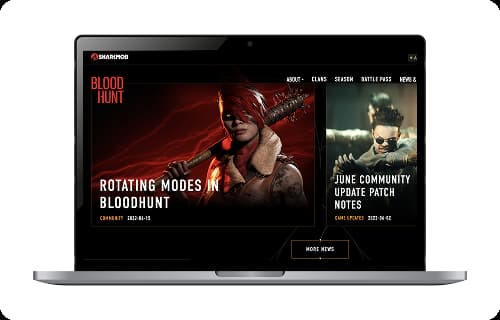
As a game developer, Sharkmob had little experience with the actual ecommerce…
Lorem ipsum dolor sit amet consectetur. Sagittis ut est sed lectus proin pulvinar auctor ut sit. Commodo ut at id lacus turpis velit amet eget est.
If your sales team updates CRM system manually and your reports pull from three different tools — CRM integration helps to remove the hand-off. One update reflects everywhere.

| CRM Benefit | Business Impact |
|---|---|
| Automated data sync | No manual updates across teams |
| Single customer record | Faster decisions with accurate data |
| Real-time pipeline visibility | Sales team acts on current data |
| Eliminated duplicate records | Cleaner reporting, fewer errors |
| Scalable integration architecture | Add new tools without breaking existing ones |
| Connected sales & marketing tools | No leads lost between handoffs |
As a game developer, Sharkmob had little experience with the actual ecommerce…
Lorem ipsum dolor sit amet consectetur. Sagittis ut est sed lectus proin pulvinar auctor ut sit. Commodo ut at id lacus turpis velit amet eget est.
Context and Challenge Our client, WeSports Group, is a leading Scandinavian group of brands…
Context and Challenge Our client, WeSports Group, is a leading Scandinavian group of brands…
Lorem ipsum dolor sit amet consectetur. Sagittis ut est sed lectus proin pulvinar auctor ut sit. Commodo ut at id lacus turpis velit amet eget est.2
Context and Challenge Our client, WeSports Group, is a leading Scandinavian group of brands…

Context and Challenge Our client, WeSports Group, is a leading Scandinavian group of brands…
Discovery & System AuditMapping your current tools, data flows, and integration points before writing a single line of code.
|
#2
|
Data Mapping & Migration StrategyDefining how data moves between systems, consenting management, deduplication, and historical data migration.
|
#4
|
Data Migration & TestingMigrating your customer data, order history, and consent records into the new system.
|
#6
|
|
#1
|
CRM Selection & Architecture PlanningIdentifying the right CRM solution for your scale and use case.
|
#3
|
Integration DevelopmentBuilding the connections between your CRM system, API, ERP systems, warehouse, payment, or marketing tools.
|
#5
|
Launch & Continuous OptimizationGoing live with full monitoring in place. After launch, we track CRM data quality, sync performance, and system behavior.
|
Tell us how your systems are connected today. We’ll show you where the gaps are and what’s worth fixing first.

The time needed to integrate your CRM depends on the number of systems involved and the complexity of your data flows. A single integration, for example, CRM to ecommerce, can take 4 to 8 weeks. At the same time, multi-system integrations with data migration typically run 3 to 6 months. If you want to assess the exact timeline for your project — contact Forbytes, we provide a custom integration project estimate after the discovery phase.
Not necessarily. The first step of the CRM system integration is assessing your current CRM first. If it fits your scale and use case, the development team integrates it with your existing stack. If itdoesn’t, the partner helps you select a better fit and migrate without losing historical data.
Not at all. Software development companies integrate a CRM in parallel with your live systems and test everything before switching over. Your team keeps working while engineers build. Go-livehappens in a controlled, staged rollout.
We follow GDPR requirements throughout the data migration process. Customer consent records move with the data, and we document every step of the transfer for compliance purposes.
At Forbytes, we monitor data flows, sync performance, and system stability after launch. If you add new tools or scale your operations, we extend the integration capabilities to cover themwithout rebuilding what’s already working.




Forbytes created an app that allowed users to quickly measure themselves to be fitted for custom shirts. As a result, we could increase our speed, quality, and shirt output per week. Forbytes was dedicated to delivering a solution that accurately addressed our needs.

Forbytes’ engineers and team leads worked as part of our RnD group and were directly managed by our company directors. They were both proactive and adaptable, qualities that perfectly match our needs in our fast-growing and constantly evolving environment.

Forbytes has a strong process-oriented way of leading the company, with good respect for themselves and their managers. They made a choice not to become too big but build slowly on more qualified people, which is paying off.

COO & Business
Development at Offerta.se

Our e-commerce site saw online inquiries and orders rise after working with Forbytes. The team used top-notch expertise to inform their suggestions and improvements. Constant communication, quick responses, and prompt delivery made for a smooth and enjoyable collaboration.

The Forbytes team was very professional and demonstrated a great understanding of the business aspects. All tasks were completed above expectations. Their experts were always available, and we never needed to wait for a response or a suggested solution.