



Sharkmob
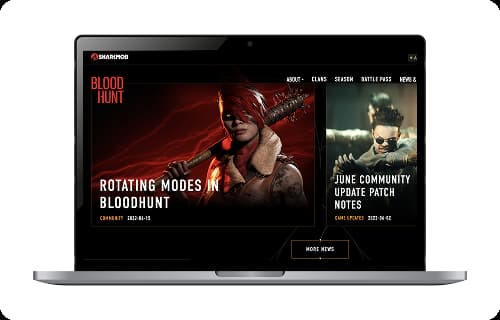
As a game developer, Sharkmob had little experience with the actual ecommerce…
Lorem ipsum dolor sit amet consectetur. Sagittis ut est sed lectus proin pulvinar auctor ut sit. Commodo ut at id lacus turpis velit amet eget est.
If you’re spending too much time entering data from multiple systems instead of using it, ERP integration is likely your best move. We connect your ERP with CRM, WMS, accounting, eCommerce, and more, eliminating manual errors, data duplication, and repetitive work.

| ERP Integration Benefit | Business Impact |
|---|---|
| Unified data flow | Confident and faster business decisions |
| ERP insights available in other systems | Fewer operational bottlenecks |
| Automated data collection and reporting | Less effort and lower operational costs |
| Less manual work and human errors | Higher process efficiency across teams |
| Integrated compliance mechanisms | Lower risks and smoother audits |
| Real-time data visibility across business infrastructure | Full business visibility to spot issues and opportunities |
As a game developer, Sharkmob had little experience with the actual ecommerce…
Lorem ipsum dolor sit amet consectetur. Sagittis ut est sed lectus proin pulvinar auctor ut sit. Commodo ut at id lacus turpis velit amet eget est.
Context and Challenge Our client, WeSports Group, is a leading Scandinavian group of brands…
Context and Challenge Our client, WeSports Group, is a leading Scandinavian group of brands…
Lorem ipsum dolor sit amet consectetur. Sagittis ut est sed lectus proin pulvinar auctor ut sit. Commodo ut at id lacus turpis velit amet eget est.2
Context and Challenge Our client, WeSports Group, is a leading Scandinavian group of brands…

Context and Challenge Our client, WeSports Group, is a leading Scandinavian group of brands…
Understanding Your SetupLearning what systems you use and what needs to be improved through ERP integration.
|
#2
|
Designing the IntegrationDefining how systems connect through APIs, data flows, and integration architecture.
|
#4
|
Testing EverythingEnsuring all systems work correctly together with accurate and stable data flow.
|
#6
|
|
#1
|
Mapping Your SystemsAnalyzing tools and data flows to identify gaps and inefficiencies between systems.
|
#3
|
Building the IntegrationDeveloping ERP connections for automated and reliable data exchange.
|
#5
|
Going Live & Ongoing SupportLaunching the integration and ensuring monitoring, stability, and improvements.
|
Tell us which systems you use and get an integration roadmap with scope, timeline, and architecture recommendations specified.

Yes, ERP integration experts work with both legacy and modern ERP solutions. Both custom and off-the-shelf solutions can be integrated using APIs, middleware, third-party tools, and other approaches. For a clearer integration plan, contact us for a no-obligation consultation.
The cost depends on several factors, including the number of systems to connect, project complexity, and technical requirements. During a discovery call, you’ll get a clear timeline based on your specific ERP system case.
Timelines vary from a few weeks to several months, depending on complexity. Simple integrations with one or two systems can take weeks, while larger multi-system projects may take a few months.
No. Your business keeps running as usual while integration happens in the background. Your team and customers won’t experience downtime or interruptions.
You don’t risk losing data when integrating your ERP software. Our team creates backups before making any changes and uses secure integration methods. Your data stays safe, protected, and fully confidential throughout the entire process.




Forbytes created an app that allowed users to quickly measure themselves to be fitted for custom shirts. As a result, we could increase our speed, quality, and shirt output per week. Forbytes was dedicated to delivering a solution that accurately addressed our needs.

Forbytes’ engineers and team leads worked as part of our RnD group and were directly managed by our company directors. They were both proactive and adaptable, qualities that perfectly match our needs in our fast-growing and constantly evolving environment.

Forbytes has a strong process-oriented way of leading the company, with good respect for themselves and their managers. They made a choice not to become too big but build slowly on more qualified people, which is paying off.

COO & Business
Development at Offerta.se

Our e-commerce site saw online inquiries and orders rise after working with Forbytes. The team used top-notch expertise to inform their suggestions and improvements. Constant communication, quick responses, and prompt delivery made for a smooth and enjoyable collaboration.

The Forbytes team was very professional and demonstrated a great understanding of the business aspects. All tasks were completed above expectations. Their experts were always available, and we never needed to wait for a response or a suggested solution.